
ENVIRO GO
An air activity monitor on wheels: aerosols, gaseous iodine, alpha, beta and gamma spectrometry in one housing, put in position by one person.
Drive up, raise the mast, start sampling
The wheel is driven and the brake is part of the delivery: one person moves 150 kg into position, raises the mast and starts. A first indication is there after minutes, a reliable figure within the hour.
- Mass
- 150 to 170 kg
- Flow
- 1 to 6 m³/h
- Protection class
- IP54
- Ambient
- −10 to 55 °C
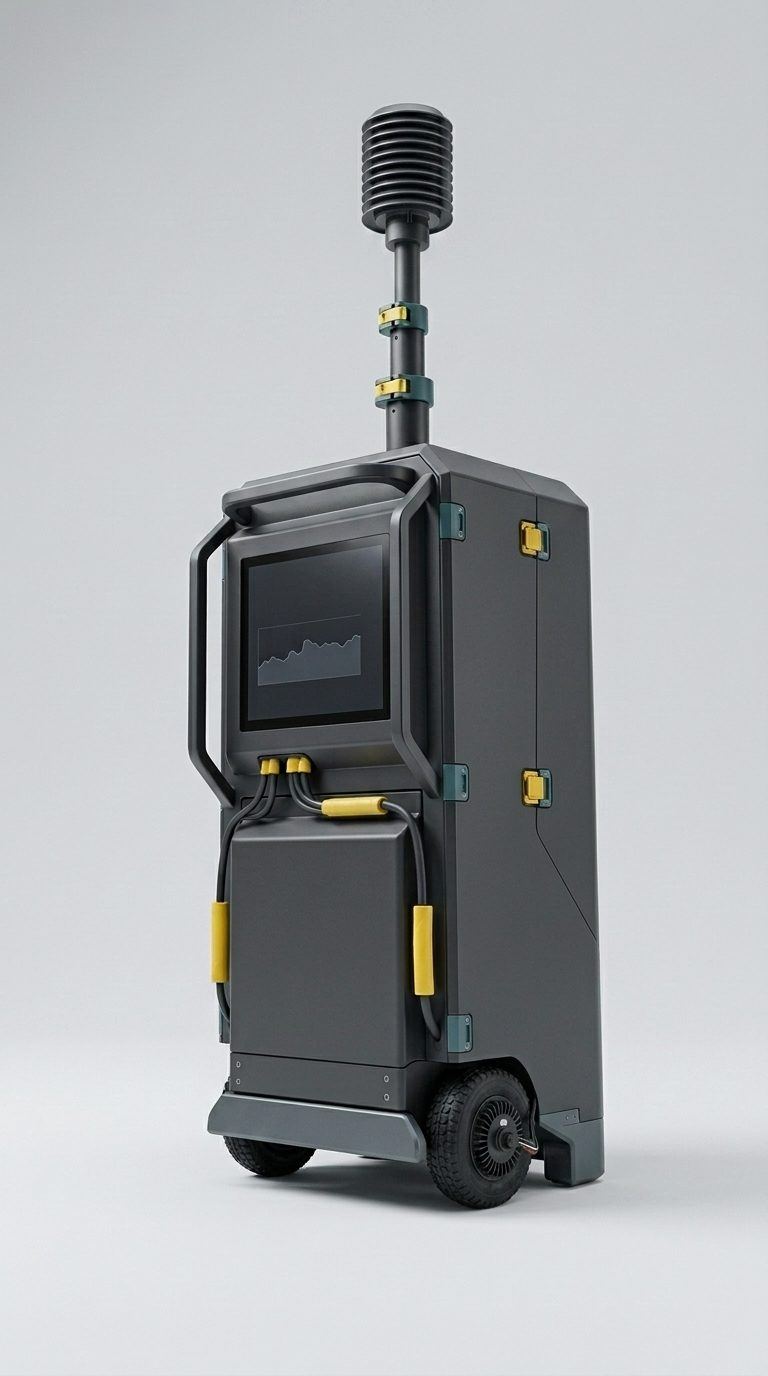
Fig. 1 — Design rendering. Mast retracted, head removed: 550 × 1650 × 400 mm.
Six stages between outside air and result
Intake head
TSP head with weather louvres and insect screen. Head for PM2.5 as an option.
Filter pad
PTFE over activated charcoal, 1700 mm² each, NFC chip in the sealing ring.
Blower
Radial, brushless, 24 V, 250 W. The flow stays constant as the pad clogs.
Alpha and beta
Mirion PIPS, 1700 mm², 35 %. 55 keV alpha, 30 keV beta, separated spectrally.
Gamma spectrometry
NaI(Tl) or HPGe in a lead chamber of 25 mm, lined with copper and tin.
Volume
Referred to 0 °C and 1013 hPa, collection efficiency 0.95. Result in Bq/m³.
The pad carries its own record
The chip holds pad identifier and type, instrument number, start and end in UTC, volume and mean flow, campaign and cycle, the six tracked nuclides with activity and detection limit, plus a checksum and a reference to the full report.
The chip is a copy
The complete data set stays in the instrument. A spectrum does not fit on an NFC chip; what does fit is the profile of the measurement and a reference. By default the reference points to the instrument itself — the data need not leave the site.
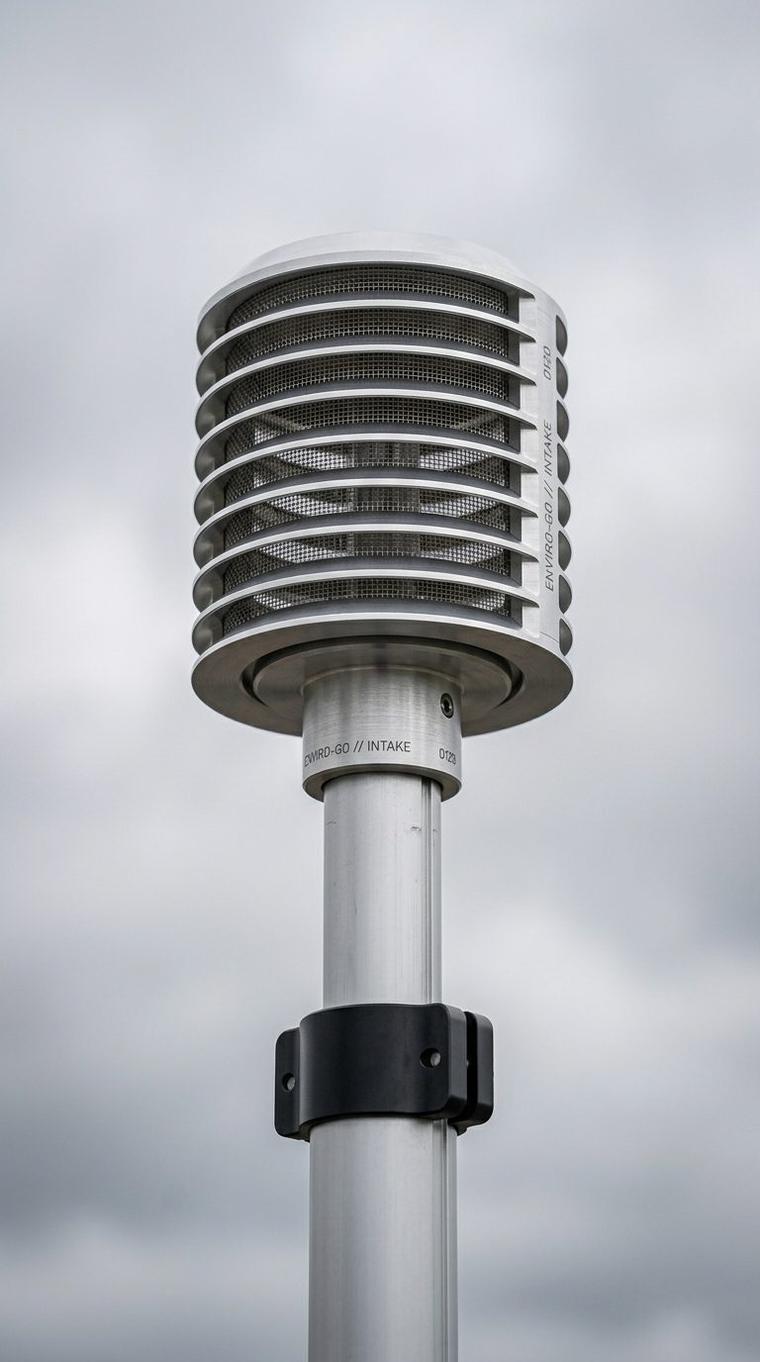
Fig. 2 — Intake head with weather louvres, design rendering.
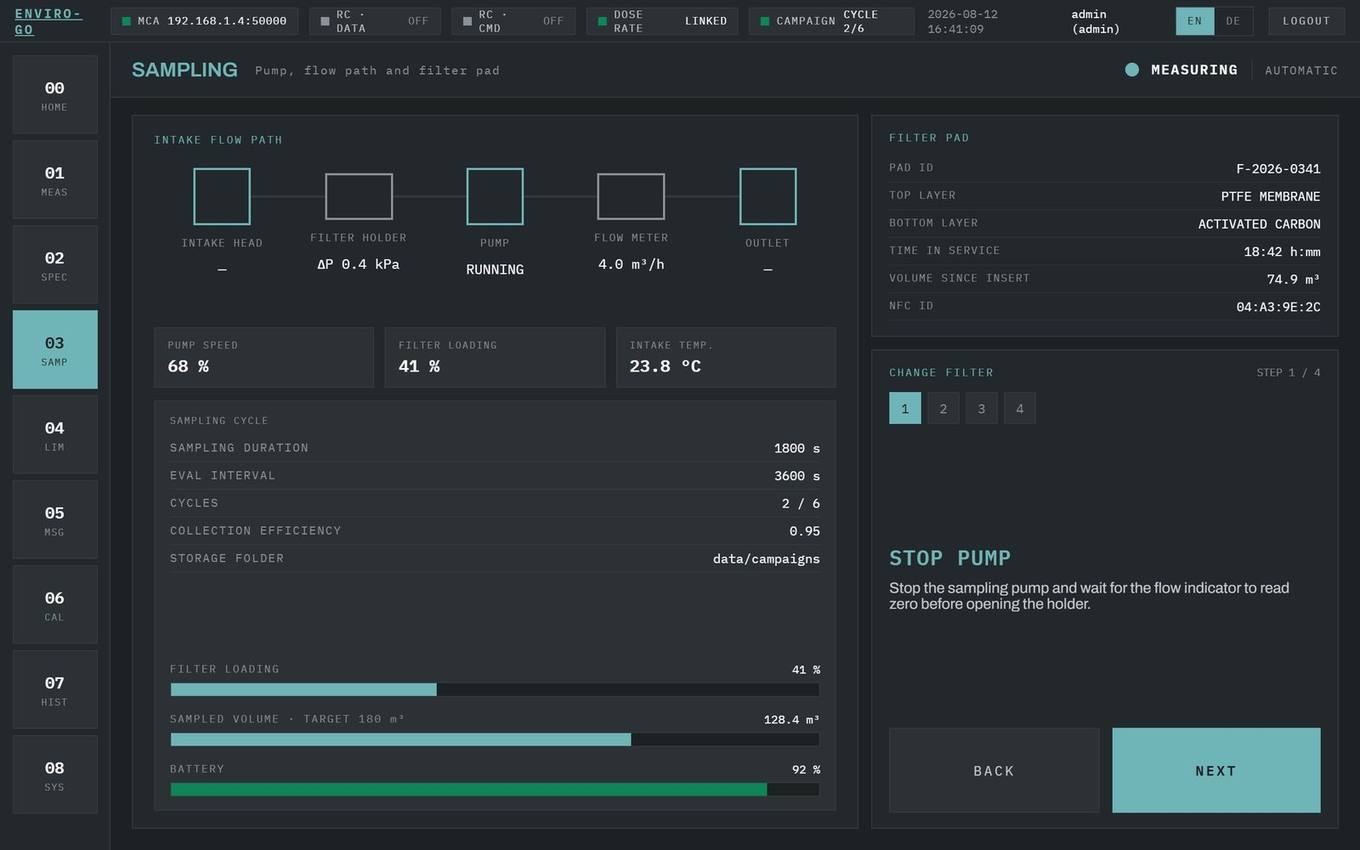
Fig. 3 — Sampling view. Operating language English, values are examples.
Radon is the real adversary
On every filter pad the short-lived progeny of natural radon-222 outweigh the artificial nuclides being looked for by orders of magnitude. An instrument that overlooks this reports alarms that are not there.
Fig. 4 — Alpha spectrum at the filter, schematic. Full width at half maximum 55 keV to the manufacturer's data, the tail towards low energy on the artificial emitter indicated.
Alpha spectroscopy separates the radon progeny polonium-218 at 6.00 MeV and polonium-214 at 7.69 MeV from the artificial alpha emitters, above all americium-241 at 5.49 MeV, with a correction for the tail towards low energy. The beta channel is tracked using the measured alpha-to-beta ratio of the same pad. Gross alpha and gross beta are reported in Bq/m³ after the compensation.
Two detectors, one instrument
Everything except the gamma detector is the same in both versions: intake, pad, blower, silicon detector, software and data paths.
Scintillator
- NaI(Tl) 2″ × 2″ with photomultiplier
- Resolution about 7 % at 662 keV
- No cooling, ready to measure at once
- Gain stabilised against temperature
- Library with 10 to 15 nuclides
- Up to 130 W lower power consumption
High-purity germanium
- Ametek ORTEC HPGe, 40 % relative efficiency
- 1.90 keV at 1.33 MeV, 0.87 keV at 122 keV
- Electric cooler, 5 to 8 h cool-down time
- Peak-to-Compton ratio 64 : 1
- Library with more than 50 nuclides
- Clearly better at long counting times
What the instrument can still detect
To ISO 11929 at 95 %, at 4.0 m³/h and a radon level of 40 Bq/m³.
| Nuclide | S · 1 h | G · 1 h | S · 24 h | G · 24 h |
|---|---|---|---|---|
| Cs-137 | 1.0 Bq/m³ | 0.60 Bq/m³ | 60 mBq/m³ | 8.0 mBq/m³ |
| Cs-134 | 0.85 Bq/m³ | 0.50 Bq/m³ | 52 mBq/m³ | 6.6 mBq/m³ |
| I-131 | 0.95 Bq/m³ | 0.50 Bq/m³ | 58 mBq/m³ | 7.3 mBq/m³ |
| Co-60 | 1.0 Bq/m³ | 0.70 Bq/m³ | 60 mBq/m³ | 8.4 mBq/m³ |
| Am-241 · Alpha | 0.060 Bq/m³ | 0.060 Bq/m³ | 0.50 mBq/m³ | 0.50 mBq/m³ |
| Sr-90 · Beta | not specified | not specified | 4.5 mBq/m³ | 4.5 mBq/m³ |
| Gross alpha | 0.10 Bq/m³ | 0.10 Bq/m³ | 0.85 mBq/m³ | 0.85 mBq/m³ |
| Gross beta | 0.50 Bq/m³ | 0.50 Bq/m³ | 4.3 mBq/m³ | 4.3 mBq/m³ |
Alpha and beta are the same in both versions — it is the same silicon detector. In version S the limit for Cs-134 worsens by about a factor of two as soon as Cs-137 dominates. The values are deliberately set at the level that comparable instruments show in the field, not at what our own model predicts. The model is better. We do not claim it before the type test has shown it.
Sampling and counting run at the same time, so the pad only fills up during the measurement. At a constant concentration the mean activity on the pad is half the final value — hence the factor of two.
Screen on the handle, operable with gloves
1920 × 1080, control areas no smaller than 20 mm. The same software as in the cabin stations. Operating language English.
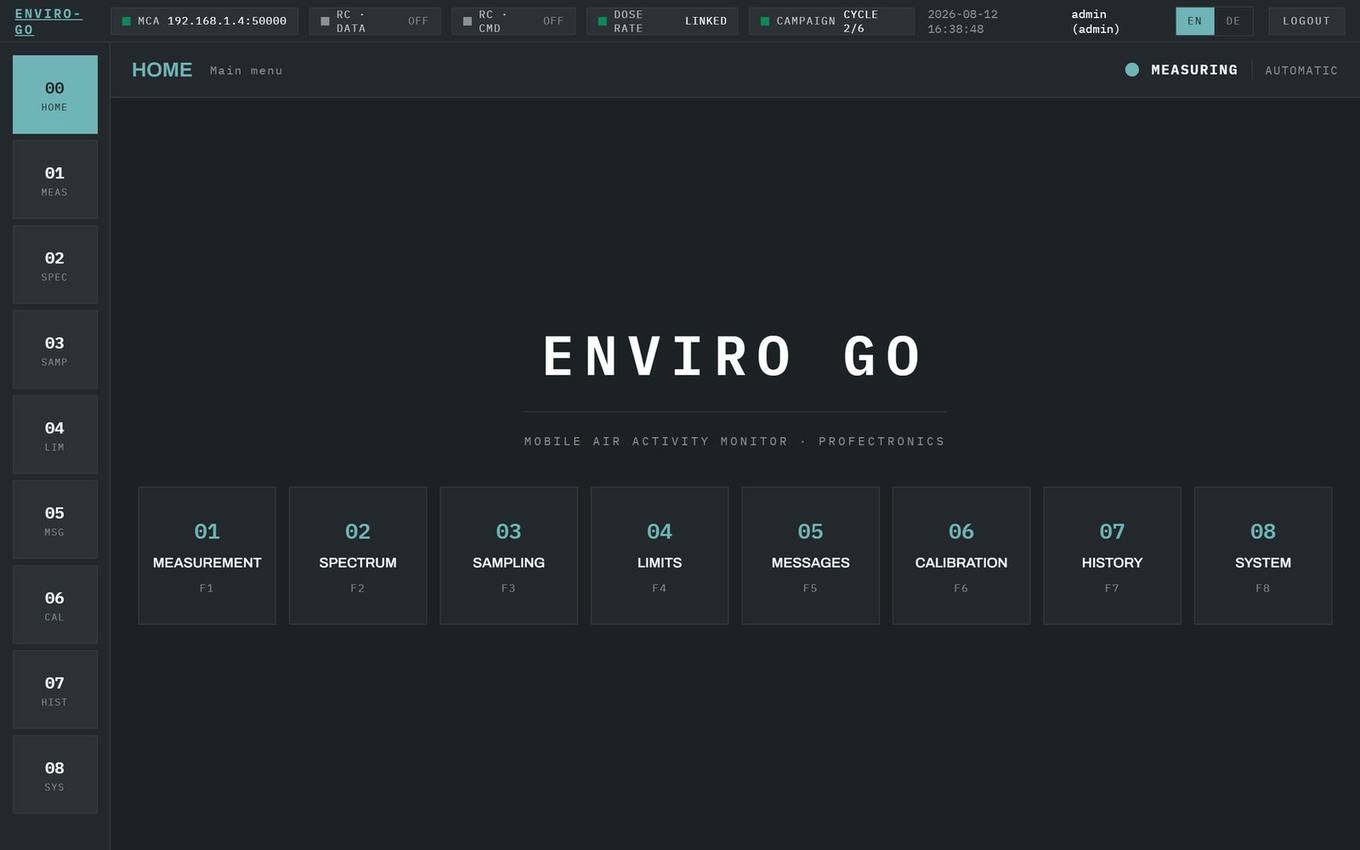
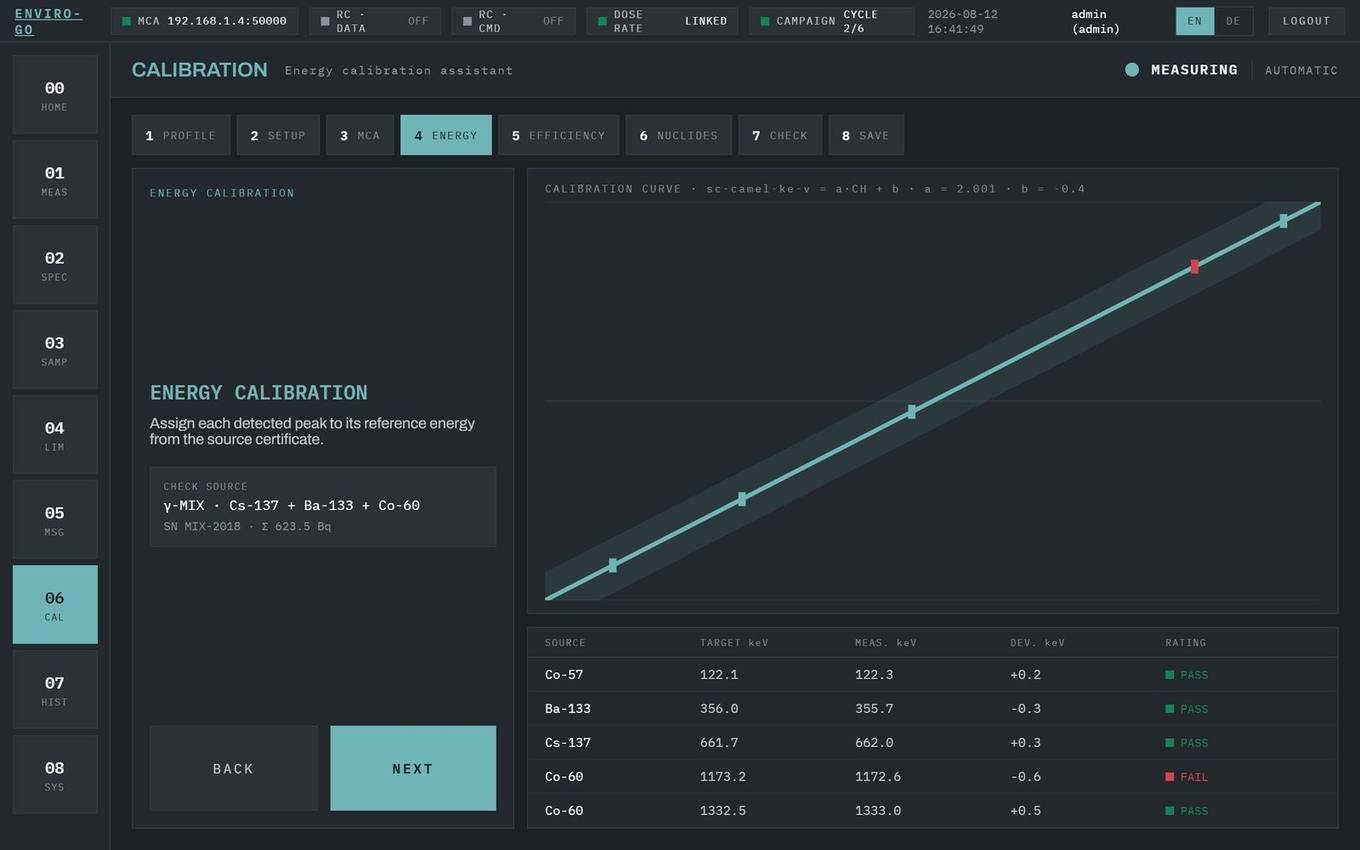
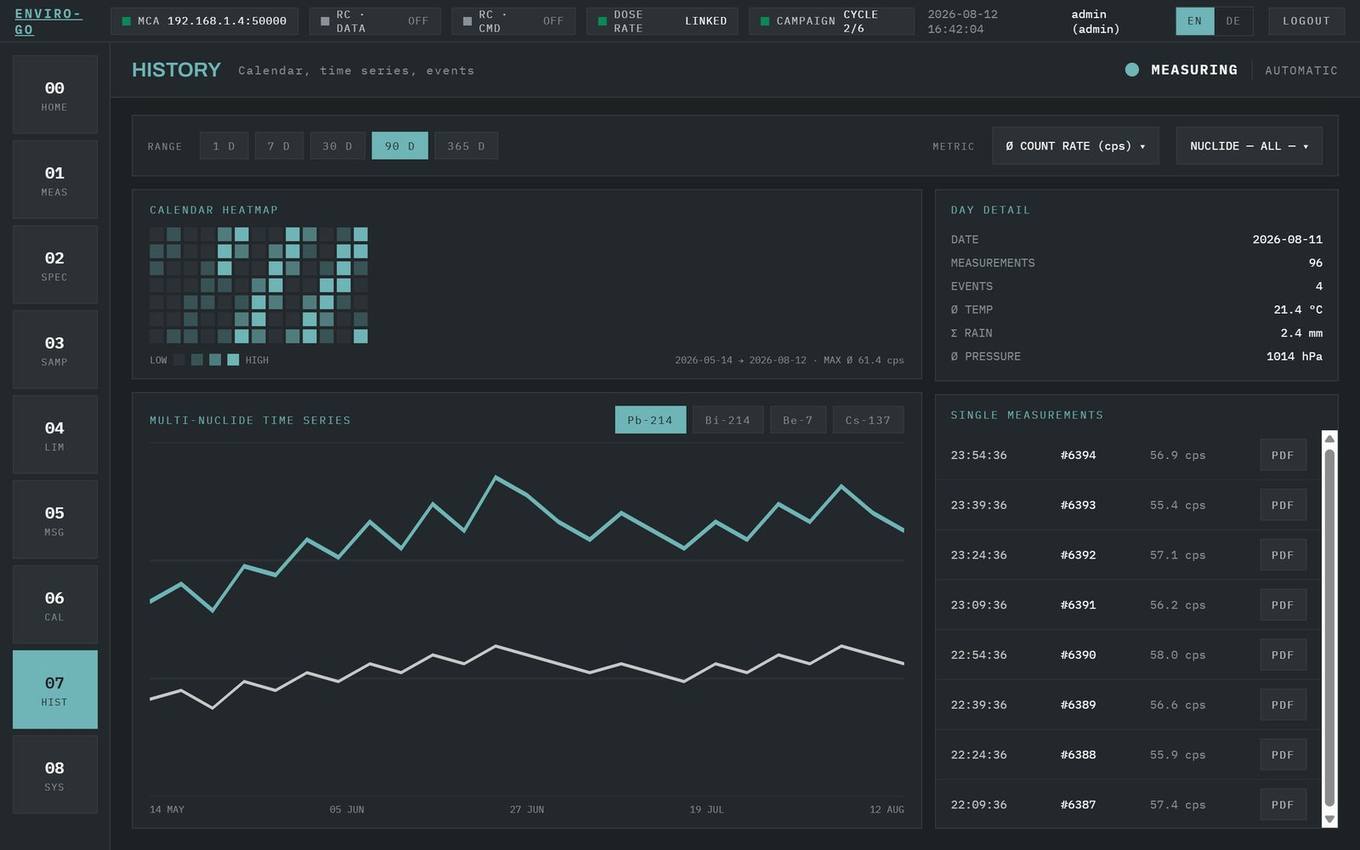
Fig. 5 to 7 — Screenshots from the operating software. Values are examples, not measurements.
Ten minutes, for a reason
What sets the two versions apart
| Parameter | ENVIRO GO S | ENVIRO GO G |
|---|---|---|
| Gamma detector | NaI(Tl) 2″ × 2″, PMT | Ametek ORTEC, 40 % rel. efficiency |
| Energy resolution | about 7 % at 662 keV | 1.90 keV at 1.33 MeV |
| Cooling | none | electric cooler |
| Ready to measure | at once | after 5 to 8 h cool-down time |
| Nuclide library | 10 to 15 nuclides | more than 50 nuclides |
| Peak to Compton | not applicable | 64 : 1 |
| Power consumption | up to 130 W lower | 1.2 kVA at full cooling |
| Mass | 150 kg | 170 kg |
What both share
55 keV alpha, 30 keV beta
1700 mm² each, with NFC chip
constant while the pad loads
Collection efficiency 0.95
Lining of copper and tin
Mains or generator, 10 m cable
Air conditioner holds it below 40 °C
outdoors under a rain hood
Mast retracted, head off
Turning circle about 1.2 m
one person sets it up
no radio, no cellular modem
Detector figures are taken from the data sheets of the component manufacturers. All other figures are design values.
What comes with it and what can be added
Included
- Instrument with intake head and mast
- Air conditioner
- Cable drum, 10 m
- Transport beaker, without measuring geometry
- Parking brake and support feet for the mast
- Factory calibration certificate
- Sphere calibration at the installation site, standard
- Interface description and example client
On request
- Intake head for PM2.5
- External uninterruptible power supply, recommended
- External intake line
- External ambient dose rate meter
- Spare pads and sealing rings
- Vehicle operation via inverter
- Loading ramp
The instrument has not been built yet. Every performance figure on this page is a design value or an experience value from comparable systems; detector figures are taken from the data sheets of the component manufacturers. A type test on the first instrument will confirm or correct them.
On the standards we write “design pending” — IEC 60761-1, -2 and -4, ISO 2889 and ISO 11929. “Tested to” appears only where the type test has been passed. CE marking to EN 61326 and EN 61010 through an external test house; the Machinery Regulation is covered by our own written risk assessment.
Which detection limit do you need, and in what time?
Tell us the nuclide, the required detection limit, the measuring time and the installation site — then we will tell you which version fits and where the limit of the method lies.
